Earlier this summer, I gave myself a challenge: could I design, scope, and build a minimum viable product (MVP) app in just one day?
With my wife and kids out of town, I had a rare block of uninterrupted time and decided to see how far I could get with some of the new AI-powered developer tools that have been making waves. The result was Elantris – a mobile and web platform designed to help people stay connected with those who matter most through daily outreach prompts, reminders, and nudges.
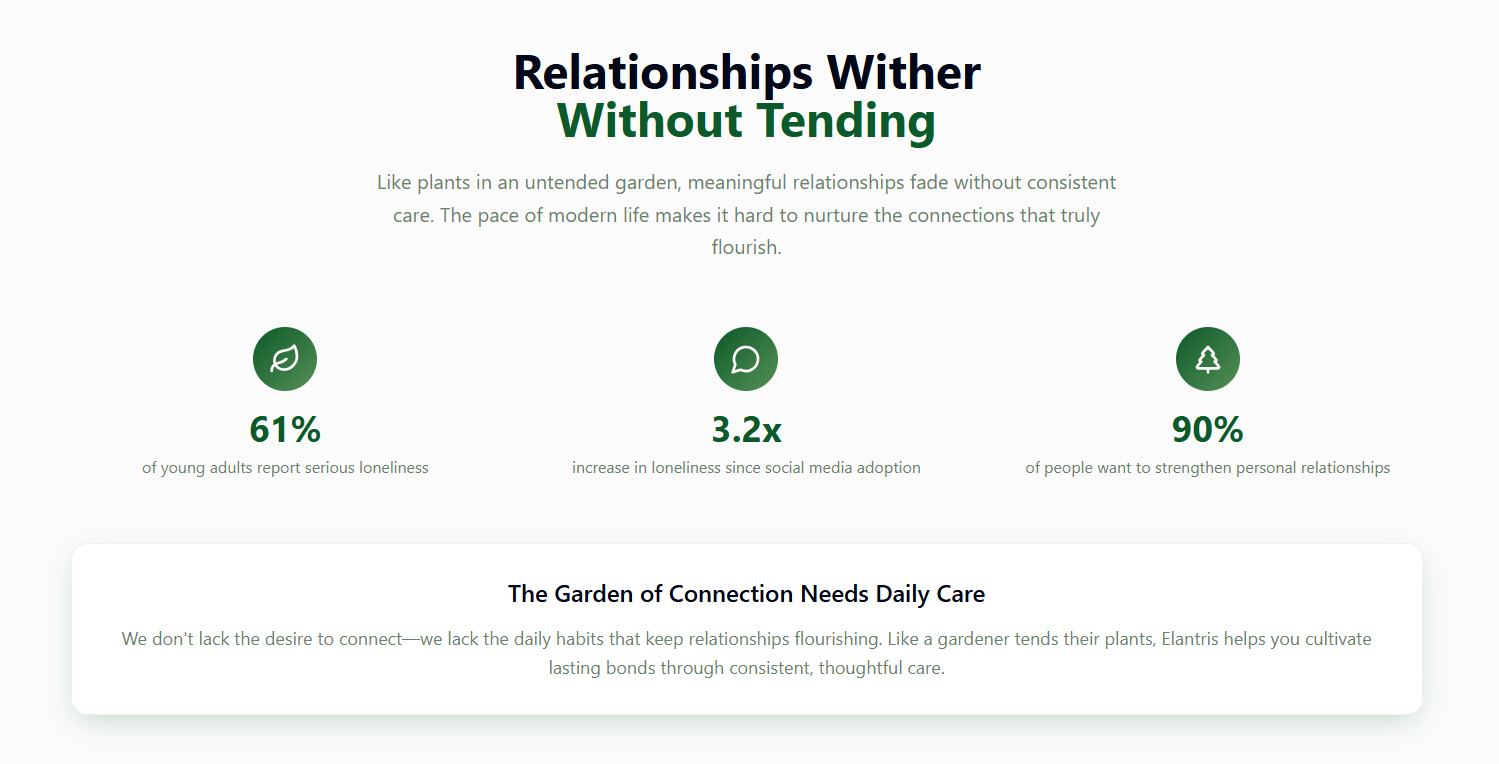
You can check out the landing page here: elantris.me
Starting With a PRD
Even though this was meant to be a “vibe code” project, I didn’t want to skip the fundamentals. I started with a lightweight Product Requirements Document (PRD) to clarify what I was building, who it was for, and why it mattered.
The idea behind Elantris came from a manual system I used for years to maintain connections with friends and family – a spreadsheet of birthdays, holidays, and reminders that nudged me to check in. The PRD helped me translate that system into an app that could:
- Give daily prompts to reach out to a contact
- Remind me of birthdays and key holidays
- Keep the flow simple by using SMS instead of building a new chat tool
- Add just a touch of gamification (streaks, XP, motivational quotes)
You can read the full PRD here:
Experiment 1: Web App with Lovable.dev
I started with Lovable.dev, an AI-powered tool for quickly generating full-stack web apps. With just the PRD as input, Lovable spun up a working prototype that let me test core flows in the browser.
- Live demo: Lovable project link
- Code: GitHub repo
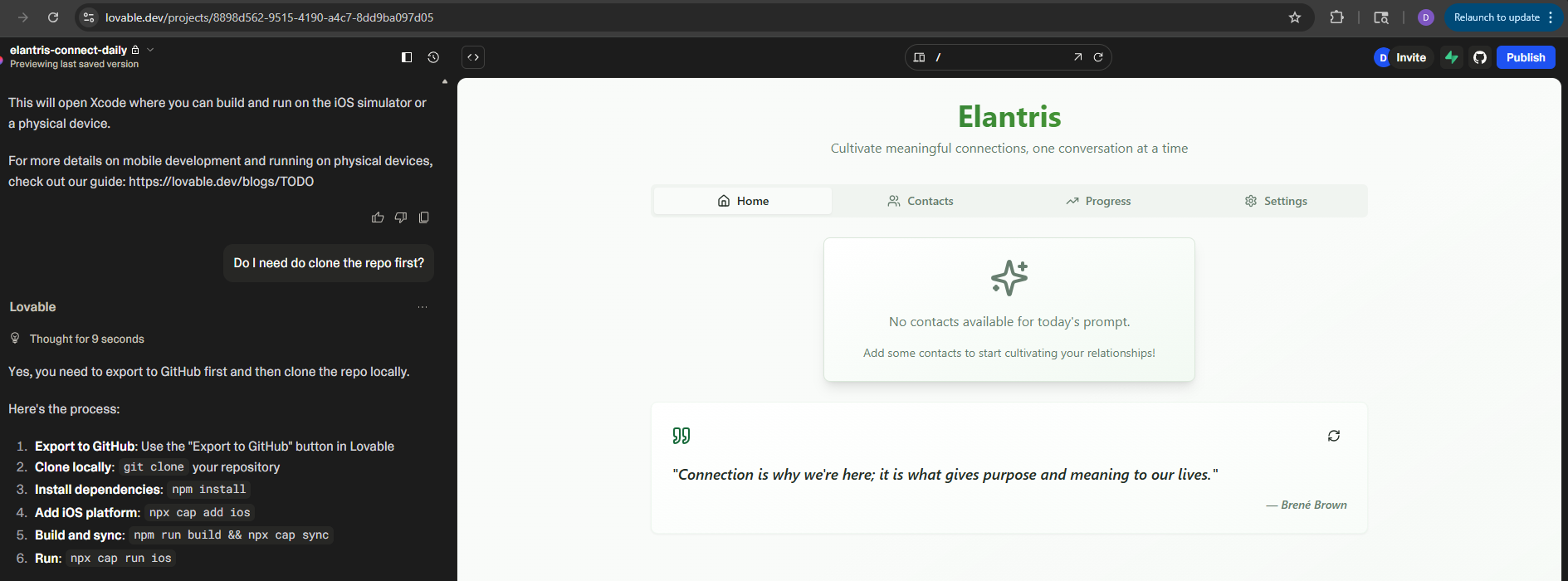
This got me surprisingly far. The big limitation, though, was when I wanted to move from web to mobile. Lovable relies on Capacitor, a runtime framework that lets you wrap web code into native shells for iOS and Android. It worked – I was able to build apps using Android Studio and Xcode (shout-out to my wife for lending me her Mac) – but every little change required going back to Lovable, regenerating, and then re-exporting. Tedious.
Experiment 2: Native Android App with Kiro
That’s when I decided to try Kiro, Amazon’s AI-powered IDE (similar to Cursor). Instead of relying on code generated elsewhere, I could directly guide the AI within my IDE, iterate faster, and have more control.
Using the same PRD as input, I built a native Android version of Elantris that was more feature-rich, responsive, and easier to test.
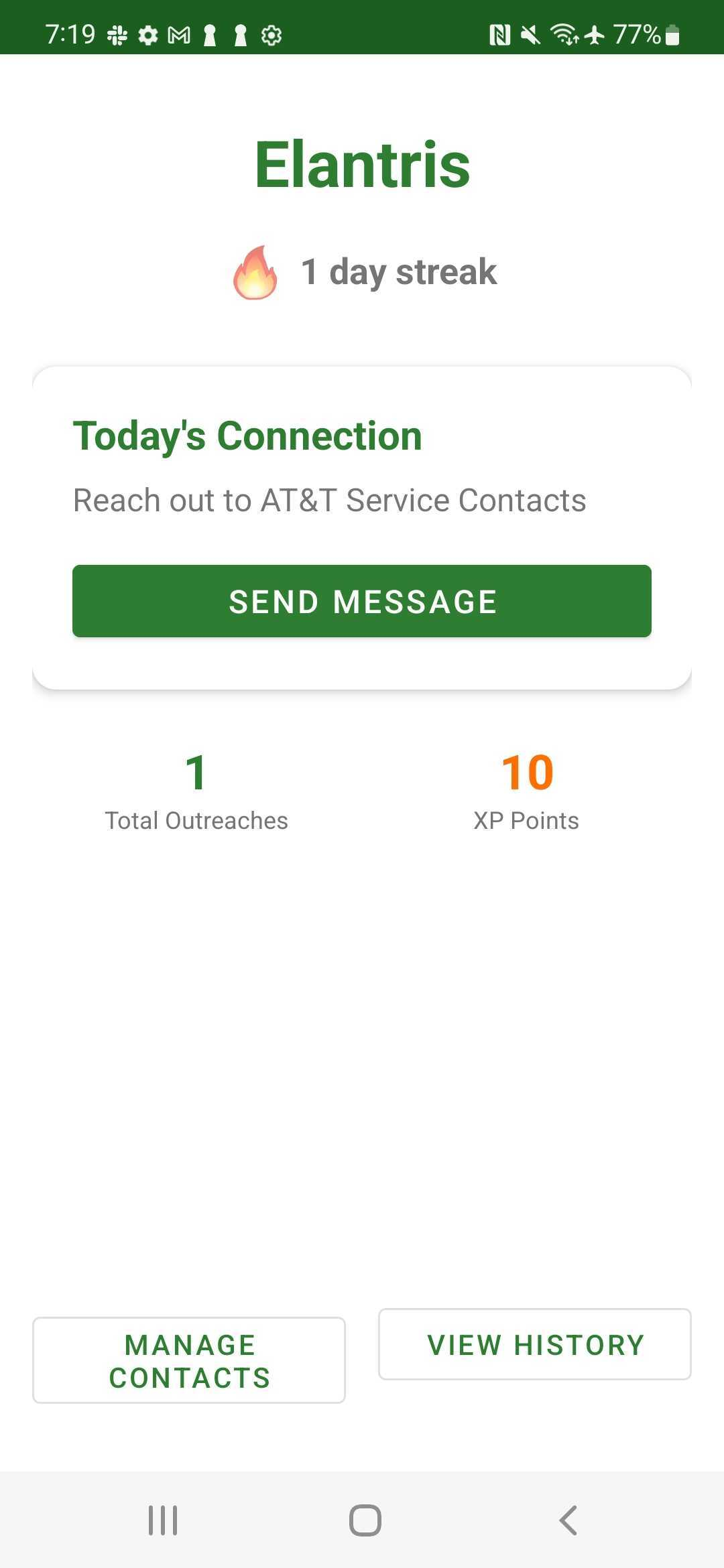
- Code: GitHub repo
This experience really highlighted the difference between low-friction prototyping tools like Lovable (great for getting started) and AI-assisted IDEs (better for building maintainable, production-ready apps).
Wrapping It Up: Landing Page
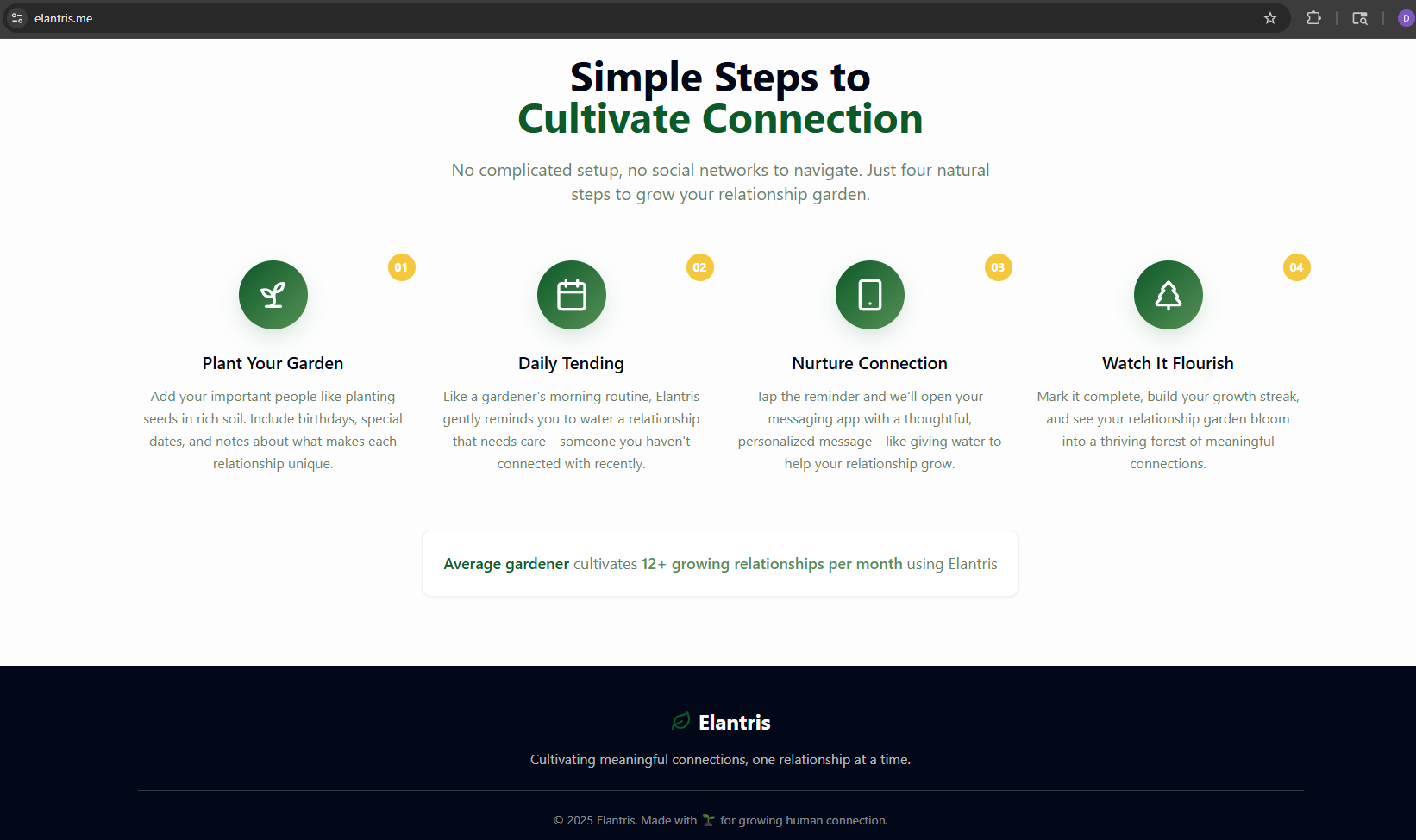
Finally, I wanted a simple landing page to capture the spirit of Elantris and allow people to sign up for updates. I went back to Lovable for this, since it excels at quick, clean front-end scaffolding.
- Website: elantris.me
- Code: GitHub repo
Reflections
This was as much about the process as the product. In one day, I:
- Drafted a PRD that clarified what the MVP should include
- Built a working web app prototype with Lovable
- Converted it into iOS and Android shells with Capacitor
- Created a more polished native Android app using Kiro
- Spun up a landing page to share the vision
Will Elantris become a full-fledged product? I’m not sure yet. But the exercise showed me just how far you can push with today’s AI tools – and how important it still is to start with a clear product vision before writing a single line of code.
At its core, Elantris is about something deeply human: reconnecting with people we care about. Whether this MVP becomes a long-term project or just a fun experiment, I’m glad I spent the day building it.